Introduction
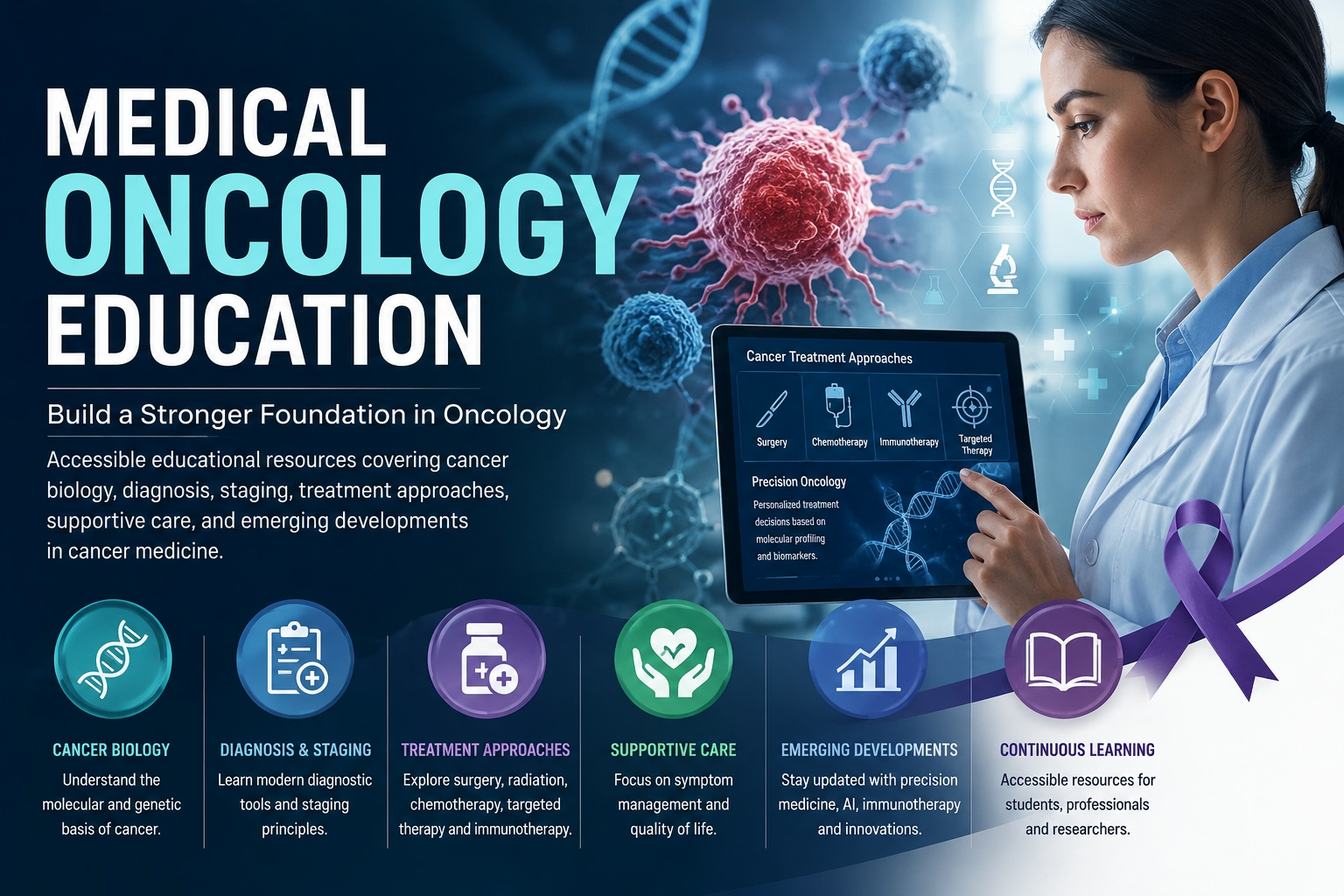
Medical oncology is a rapidly evolving field that combines cancer biology, diagnostic science, clinical medicine, therapeutics, and supportive care. For healthcare professionals, students, researchers, and anyone interested in modern cancer medicine, understanding the fundamentals of oncology provides an essential foundation for interpreting how cancer develops, how it is diagnosed and staged, and how treatment decisions are made.
This guide introduces the major concepts of medical oncology in an accessible way—from the biology of cancer to conventional treatments, precision medicine, immunotherapy, supportive care, and emerging developments.
Educational note: This article is intended for educational purposes and is not a substitute for individualized medical advice or treatment recommendations from qualified oncology professionals.
1. Understanding Cancer Biology
Cancer begins when cells acquire genetic and molecular changes that disrupt normal mechanisms controlling cell growth, division, survival, and repair.
Healthy cells normally respond to signals that regulate when they should grow and when they should stop dividing. Cancer cells can acquire characteristics that allow them to:
- Grow and divide uncontrollably
- Avoid programmed cell death
- Evade immune surveillance
- Stimulate the formation of new blood vessels
- Invade surrounding tissues
- Spread to distant organs
- Accumulate additional genetic and molecular alterations
Cancer is therefore not a single disease. It represents a large group of diseases with different biological behaviors, molecular characteristics, prognoses, and treatment responses.
Genetic and Molecular Changes
Cancer development can involve alterations in:
- Oncogenes, which can promote abnormal cell growth when activated
- Tumor suppressor genes, which normally help prevent uncontrolled growth
- DNA repair genes, which help maintain genomic stability
- Signaling pathways, which regulate proliferation, survival, and cellular communication
Modern oncology increasingly uses molecular profiling to identify alterations that may influence diagnosis, prognosis, or treatment selection.
2. Cancer Diagnosis
An accurate diagnosis is the starting point for effective cancer management.
Depending on the suspected cancer, evaluation may include:
Medical History and Physical Examination
Clinicians assess symptoms, risk factors, family history, previous medical conditions, and physical findings.
Imaging
Imaging techniques can help identify and characterize tumors and determine whether disease may have spread.
Common modalities include:
- X-ray
- Ultrasound
- CT scans
- MRI
- PET/CT
- Nuclear medicine imaging
Laboratory Testing
Blood and other laboratory tests can provide information about organ function, blood counts, biochemical abnormalities, and—in selected cancers—tumor-associated biomarkers.
Biopsy and Pathology
A biopsy involves obtaining tissue or cells for examination. Pathologists evaluate the specimen to determine whether cancer is present and, when applicable, identify its type and characteristics.
Pathology may incorporate:
- Histological examination
- Immunohistochemistry
- Cytogenetic testing
- Molecular testing
- Genomic profiling
Together, these approaches help establish a more precise diagnosis.
3. Cancer Staging
After diagnosis, determining the stage of cancer is critical because it provides information about how extensively the disease has spread.
For many solid tumors, clinicians use the TNM system:
- T (Tumor): describes the primary tumor’s size or local extent.
- N (Nodes): indicates involvement of regional lymph nodes.
- M (Metastasis): indicates whether distant metastases are present.
The specific staging system varies according to cancer type, and some cancers use different classification approaches.
Why Staging Matters
Staging can help clinicians:
- Estimate prognosis
- Select appropriate treatment strategies
- Determine eligibility for clinical trials
- Communicate disease characteristics consistently
- Monitor treatment response and disease progression
It is important to distinguish stage from grade. Stage primarily describes the extent of disease, whereas grade describes characteristics of the cancer cells and how abnormal they appear under pathological evaluation.
4. Major Approaches to Cancer Treatment
Cancer treatment is often multidisciplinary. Depending on the cancer and its characteristics, treatment may involve one or several modalities.
Surgery
Surgery can remove localized tumors and may play a diagnostic, staging, curative, or symptom-relieving role.
Radiation Therapy
Radiation therapy uses high-energy radiation to damage cancer-cell DNA. It can be used with curative intent, after surgery, before surgery, or to relieve symptoms such as pain caused by cancer.
Chemotherapy
Chemotherapy uses cytotoxic drugs that interfere with cellular processes required for cancer-cell survival and proliferation.
Because many conventional chemotherapy drugs also affect rapidly dividing healthy cells, treatment can produce adverse effects such as:
- Fatigue
- Nausea
- Hair loss
- Reduced blood-cell counts
- Increased susceptibility to infection
- Neuropathy with certain agents
The specific effects depend on the drugs and treatment regimen.
Hormone Therapy
Some cancers depend on hormones for growth. Hormone-directed treatments can reduce hormone production or block hormone signaling.
This approach is particularly important in cancers such as certain breast and prostate cancers.
Targeted Therapy
Targeted therapies are designed to interfere with specific molecular alterations or biological pathways involved in cancer.
Examples include therapies directed against:
- Specific receptors
- Kinases
- DNA-repair pathways
- Angiogenesis pathways
- Other molecular drivers
Targeted therapy has helped move oncology toward increasingly individualized treatment.
Immunotherapy
Immunotherapy aims to harness or enhance the body’s immune response against cancer.
One important class is immune checkpoint inhibitors, which can block inhibitory signals that prevent immune cells from attacking cancer cells effectively.
Other immunotherapeutic approaches include cellular therapies, cancer vaccines under investigation, and immune-modulating treatments.
5. Precision Oncology
One of the most important developments in modern cancer medicine is the increasing use of precision oncology.
Instead of relying solely on cancer location and microscopic appearance, clinicians may also consider molecular characteristics of an individual’s tumor.
A precision oncology workflow can involve:
Patient → Diagnosis → Tissue acquisition → Molecular testing → Biomarker identification → Treatment selection → Response monitoring
Molecular testing may identify alterations that are:
- Actionable for treatment
- Prognostically relevant
- Useful for diagnosis
- Relevant to clinical trial eligibility
However, not every detected mutation has an available treatment, and the clinical significance of genomic findings must be interpreted within the broader clinical context.
6. Supportive and Palliative Care
Cancer treatment is not limited to directly targeting tumor cells.
Supportive care focuses on preventing and managing complications and treatment-related side effects while helping patients maintain quality of life.
It can address:
- Pain
- Nausea and vomiting
- Fatigue
- Nutritional problems
- Psychological and emotional concerns
- Treatment-related complications
- Sleep problems
- Functional difficulties
Palliative care focuses on improving quality of life and relieving suffering associated with serious illness. It can be provided alongside cancer-directed treatment and is not synonymous with stopping treatment.
7. Multidisciplinary Cancer Care
Modern oncology frequently involves collaboration among multiple healthcare professionals.
A multidisciplinary cancer team may include:
- Medical oncologists
- Surgical oncologists
- Radiation oncologists
- Pathologists
- Radiologists
- Oncology nurses
- Pharmacists
- Genetic counselors
- Nutrition professionals
- Palliative-care specialists
- Rehabilitation professionals
- Psychosocial-care professionals
This team-based approach helps integrate diagnostic information, treatment options, supportive care, and patient preferences.
8. Monitoring Treatment Response
After treatment begins, clinicians monitor whether the cancer is responding, remaining stable, or progressing.
Evaluation may include:
- Clinical assessment
- Imaging
- Laboratory testing
- Biomarker measurements in selected cancers
- Pathological assessment when appropriate
Response criteria and monitoring strategies vary substantially between cancer types and treatment approaches.
Importantly, radiological changes do not always perfectly reflect biological response, particularly with some immunotherapies. Therefore, response assessment requires clinical context.
9. Emerging Developments in Oncology
Cancer medicine continues to evolve rapidly.
Artificial Intelligence
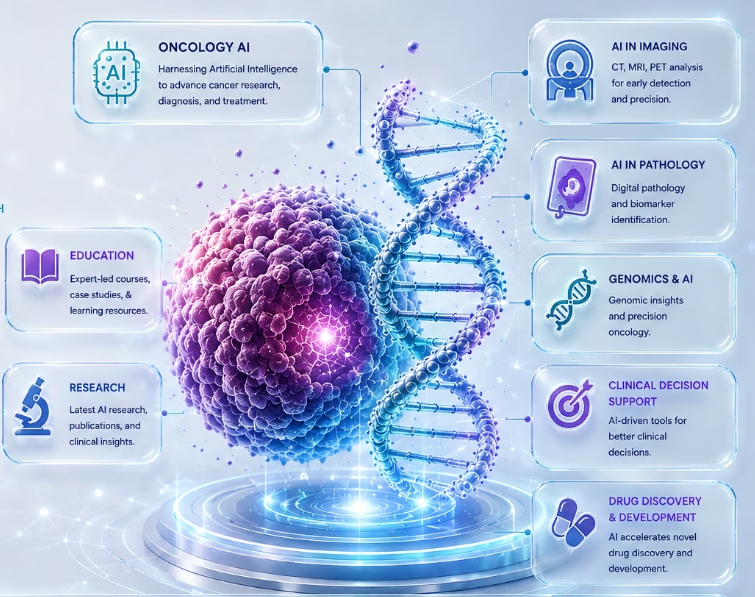
AI is increasingly being investigated and implemented in areas such as:
- Medical imaging
- Pathology
- Risk prediction
- Treatment planning
- Clinical decision support
- Drug discovery
- Patient monitoring
AI can potentially help clinicians analyze large and complex datasets, but validation, transparency, bias, privacy, and clinical safety remain important considerations.
Liquid Biopsy
Liquid biopsy analyzes tumor-derived material circulating in body fluids, particularly blood. Depending on the application, this can include circulating tumor DNA and other biomarkers.
Potential applications include monitoring treatment response, identifying molecular changes, and detecting minimal residual disease. Many applications remain under active research or are appropriate only in specific clinical contexts.
Immunotherapy and Cellular Therapies
Research continues to expand the use of immune-based approaches, including engineered immune-cell therapies and combinations of immunotherapies with other cancer treatments.
Cancer Vaccines
Researchers are exploring personalized and therapeutic cancer vaccines designed to stimulate immune responses against tumor-specific targets.
Novel Drug Development
Advances in molecular biology, computational biology, and drug discovery are enabling researchers to investigate increasingly specific cancer targets and treatment combinations.
10. The Importance of Clinical Trials
Clinical trials are essential for advancing cancer medicine.
They evaluate new:
- Drugs
- Treatment combinations
- Diagnostic technologies
- Biomarkers
- Radiation approaches
- Surgical techniques
- Supportive-care strategies
Clinical research generally progresses through structured phases designed to evaluate safety, dosing, efficacy, and broader clinical benefit.
For eligible patients, clinical trials can provide access to investigational approaches while contributing to future improvements in cancer care.
11. Building Your Medical Oncology Knowledge
For students, healthcare professionals, researchers, and AI/healthcare professionals, a useful learning pathway is:
Cancer Biology → Pathology → Diagnosis → Staging → Treatment Modalities → Pharmacology → Precision Oncology → Supportive Care → Clinical Trials → Emerging Technologies
A strong oncology foundation should combine theoretical knowledge with an understanding of how information flows through real clinical decision-making.
For example:
Symptoms → Diagnostic workup → Pathological diagnosis → Staging → Biomarker assessment → Multidisciplinary discussion → Treatment plan → Monitoring → Supportive care → Follow-up
This framework provides a practical way to understand oncology without viewing each topic in isolation.
Conclusion
Medical oncology is moving from a predominantly disease-centered approach toward increasingly molecularly informed, personalized, multidisciplinary, and patient-centered cancer care.
Understanding the fundamentals of cancer biology, diagnosis, staging, treatment, supportive care, and emerging technologies provides a strong foundation for exploring this rapidly developing field.
As precision medicine, immunotherapy, artificial intelligence, molecular diagnostics, and novel therapeutics continue to advance, oncology education will become increasingly important—not only for clinicians and researchers, but also for professionals working at the intersection of healthcare and technology.
The future of cancer medicine will depend not on a single technology or treatment, but on integrating biology, data, clinical expertise, technology, and patient-centered care to make cancer diagnosis and treatment more precise and effective.
Suggested Learning Areas
If you are beginning your oncology journey, consider studying these topics in order:
- Fundamentals of cancer biology
- Tumor classification and pathology
- Diagnostic imaging and biopsy
- Cancer staging and grading
- Principles of chemotherapy
- Radiation and surgical oncology
- Hormonal and targeted therapies
- Immunotherapy
- Precision medicine and biomarkers
- Supportive and palliative care
- Clinical trials
- AI and emerging technologies in oncology